
🇪🇸 Spain
Eye Surgery Clinics in Spain
Spain is a top destination for affordable, high-quality eye surgery in Europe. World-class clinics in Madrid, Barcelona, Valencia, and beyond offer cutting-edge procedures at competitive prices.
Loading map...
179 clinics
Barraquer Ophthalmology Cen
✓Sarrià-Sant Gervasi, Cataluña
Clínica Baviera
✓Gijón, Asturias
Clínica Fernández Ulloa - Instituto Oftalmologico de Vigo
✓Vigo, Galicia
Oftalmólogo Dr. Nabil Ragaei
✓Marbella, Andalucía
Clinica Oftalmologica Santa Lucia
✓Distrito Centro, Andalucía
Clinica Oftalmologica IOTT Barcelona
✓Sarrià-Sant Gervasi, Cataluña
Clear Sight Abroad
Prague, Czech Republic
Considering eye surgery abroad? We handle everything — from your first consultation to post-op care. English-speaking team, airport transfers, accommodation assistance, and no hidden fees. Save up to 70% compared to Western Europe.
Eyecos Neweyes Eyes Innova SL
✓Eixample, Cataluña
Brito Muguerza OFTALMOLOGÍA Doctora Mª Carmelina Brito
✓entreplanta, Islas Canarias
Oftalmología Vistahermosa S.L.
✓Alacant, Comunidad Valenciana
Vithas Eurocanarias Instituto Oftalmológico
✓Las Palmas de Gran Canaria, Islas Canarias
Centro oftalmologico de Canarias
✓Las Palmas de Gran Canaria, Islas Canarias
HM Eye Center
✓Chamberí, Madrid
Clínica Oftalmológica Dra. Sara González
✓Gijón, Asturias
Instituto Oftalmológico Quirónsalud A Coruña
✓1, Galicia
Clinica Oftalmológica Damborenea
✓Bilbao, País Vasco
Instituto Provincial de Oftalmología - Hospital General Universitario Gregorio Marañón
✓Chamberí, Madrid
Clínica Oftalmológica Dr. Cascante
✓ENTLO IZDA, Aragón
Instituto Oftalmológico Quirónsalud Zaragoza
✓82, Aragón
Institut Oftalmic de Mallorca
✓Palma
Everything You Need to Know About Eye Surgery in Spain
Comprehensive guide covering 179 verified clinics, pricing, procedures, healthcare standards, and practical tips for eye surgery patients.
Why Choose Spain for Eye Surgery?
Spain has firmly established itself as one of Europe's premier destinations for eye surgery, combining world-class ophthalmological expertise with remarkably competitive pricing. The country's long tradition in refractive and cataract surgery dates back decades, with pioneering clinics like the Barraquer Centre in Barcelona having shaped modern eye surgery techniques since the mid-20th century. Today, Spain is home to some of the most advanced laser platforms and surgical technologies available anywhere in the world, attracting patients from across Europe, the Middle East, and beyond.
One of the most compelling reasons to choose Spain for eye surgery is the significant cost advantage. Procedures such as LASIK typically cost 40-60% less than in Germany, the UK, or Scandinavia, without any compromise in quality or safety. Spanish ophthalmologists are rigorously trained, many holding dual specialisations, and the country's regulatory framework ensures that clinics meet stringent European Union medical standards. The combination of affordability and excellence has made Spain a natural choice for medical tourists seeking vision correction.
Beyond the clinical aspects, Spain offers an unbeatable recovery environment. With over 300 days of sunshine per year in many regions, patients can recuperate in a warm, pleasant climate. Cities like Barcelona, Madrid, and Valencia provide excellent infrastructure, international airports with direct connections across Europe, and a wide range of accommodation options. The Spanish healthcare system consistently ranks among the best in the world, and English-speaking staff are increasingly common at major eye clinics, particularly those that cater to international patients.
Spain's appeal for eye surgery is further enhanced by its robust medical tourism infrastructure. Many clinics offer comprehensive packages that include pre-operative assessments, the procedure itself, post-operative care, and even assistance with travel arrangements. The country's rich cultural offerings, renowned cuisine, and beautiful landscapes mean that patients can combine their medical trip with a memorable holiday experience, turning a necessary procedure into a rewarding journey.

Eye Surgery Costs & Price Comparison
Spain offers some of the most competitive eye surgery prices in Western Europe, making it an attractive destination for patients seeking high-quality vision correction without the premium price tags found in northern European countries. The cost of eye surgery in Spain varies depending on the clinic, the city, the technology used, and the complexity of the patient's condition, but overall pricing remains highly accessible.
When compared to neighbouring countries, Spain's pricing advantage becomes immediately apparent. The same LASIK procedure that costs €2,500 - €4,000 in Germany or €3,000 - €5,000 in the UK can be performed in Spain for as little as €800 - €2,200 per eye, depending on the clinic and technology chosen. Even at the upper end of Spanish pricing, patients typically save 30-50% compared to northern European alternatives. This price difference does not reflect a gap in quality; rather, it is a function of Spain's lower cost of living and highly competitive private healthcare market. Many Spanish clinics invest heavily in the latest Zeiss, Alcon, and Schwind laser platforms, ensuring that patients receive treatment on par with the best facilities anywhere in Europe.
LASIK / SMILE
€800 - €2,200 per eye
PRK / TransPRK
€700 - €1,800 per eye
Cataract Surgery
€1,500 - €3,500 per eye
Lens Replacement (RLE)
€2,000 - €4,500 per eye
ICL (Implantable Collamer Lens)
€2,500 - €4,000 per eye

Types of Eye Surgery Available
LASIK (Laser-Assisted In Situ Keratomileusis)
LASIK remains the most popular refractive surgery in Spain, performed at virtually every major eye clinic in the country. The procedure involves creating a thin corneal flap with a femtosecond laser before reshaping the underlying tissue with an excimer laser to correct myopia, hyperopia, and astigmatism. Most Spanish clinics offer bladeless, all-laser LASIK using state-of-the-art platforms such as the Zeiss VisuMax or the Alcon WaveLight EX500, ensuring exceptional precision and rapid recovery times of just 24-48 hours.
SMILE / SMILE Pro
SMILE (Small Incision Lenticule Extraction) has gained significant popularity in Spain, particularly in major centres like Barcelona and Madrid. This minimally invasive procedure uses a single femtosecond laser to create and remove a small lens-shaped piece of corneal tissue through a tiny incision, correcting myopia and astigmatism without creating a flap. SMILE Pro, the latest evolution of this technology using the Zeiss VISUMAX 800, offers even faster treatment times and is available at several leading Spanish clinics.
PRK / TransPRK
PRK and its modern variant TransPRK are widely available across Spain and remain an excellent option for patients with thinner corneas or those engaged in contact sports. Unlike LASIK, PRK reshapes the corneal surface directly after removing the epithelium, eliminating any flap-related risks. While the recovery period is slightly longer than LASIK (typically 3-5 days), the long-term visual outcomes are equivalent, and many Spanish surgeons recommend it for specific patient profiles.
Cataract Surgery
Spain is a leading destination for cataract surgery, with ophthalmologists performing hundreds of thousands of procedures annually. Modern cataract surgery in Spain typically involves femtosecond laser-assisted phacoemulsification, where the clouded natural lens is broken up and removed through a tiny incision before being replaced with an artificial intraocular lens (IOL). Patients can choose from monofocal, multifocal, toric, and extended depth of focus (EDOF) lenses depending on their visual needs and budget.
Lens Replacement (Refractive Lens Exchange)
Refractive Lens Exchange (RLE) is increasingly popular in Spain among patients over 45 who wish to eliminate their dependence on reading glasses. The procedure is technically identical to cataract surgery but is performed on a clear lens. Spanish clinics offer the full range of premium IOLs, including trifocal lenses from Alcon and Zeiss, allowing patients to achieve excellent vision at all distances. RLE in Spain offers exceptional value given the quality of lenses and surgical expertise available.
ICL (Implantable Collamer Lens)
ICL surgery is widely available in Spain and is particularly recommended for patients with high myopia or those who are not suitable candidates for laser eye surgery. The EVO Visian ICL is the most commonly implanted model, placed behind the iris and in front of the natural lens through a small incision. Spanish ophthalmologists have extensive experience with ICL implantation, and the procedure is offered at competitive prices compared to most other Western European countries.
Top Eye Surgery Clinics & Hospitals
Clínica Baviera
One of Spain's largest and most recognised eye surgery chains, Clínica Baviera operates over 80 clinics across Spain and internationally. Founded in 1992 in Valencia, the group has performed more than one million procedures and is listed on the Spanish stock exchange, reflecting its scale and credibility. They offer the full spectrum of refractive and cataract surgeries using cutting-edge technology and have dedicated international patient departments with multilingual staff.
Miranza / Vissum
The Miranza Group, incorporating the renowned Vissum brand, is Spain's largest ophthalmology network with over 30 centres nationwide. Known for their research contributions and highly specialised surgeons, Miranza clinics are particularly strong in complex cases including keratoconus treatment and premium IOL implantation. Their Alicante and Madrid centres are especially popular with international patients seeking advanced refractive solutions.
IMO (Instituto de Microcirugía Ocular)
Based in Barcelona, IMO is one of Spain's most prestigious private eye hospitals, offering comprehensive ophthalmological care under one roof. The institute is renowned for its research activities, fellowship programmes, and for attracting some of Spain's top ophthalmic surgeons. IMO's purpose-built facility features the latest diagnostic and surgical equipment, and their international patient department provides seamless care for visitors from abroad.
Centro de Oftalmología Barraquer
The Barraquer Centre in Barcelona is a true pioneer in global ophthalmology, founded by Professor Joaquin Barraquer, who developed the technique of keratomileusis that laid the groundwork for modern LASIK. Operating since 1941, this historic institution combines decades of surgical tradition with cutting-edge technology and continues to train ophthalmologists from around the world. The centre is an iconic destination for patients seeking the very best in eye surgery.
Oftalvist
With over 30 clinics across Spain, Oftalvist is one of the country's fastest-growing ophthalmology groups. The network is known for its modern facilities, extensive use of advanced laser platforms, and strong patient care protocols. Oftalvist centres are found in major cities including Madrid, Barcelona, Valencia, Seville, and Malaga, making them a convenient choice for patients regardless of their travel destination.
Clínica Novovisión
Established in 1991 in Murcia, Clínica Novovisión has expanded to multiple locations across southeastern Spain, including Alicante and Madrid. The clinic specialises in laser refractive surgery and premium cataract procedures, and is known for its personalised approach to patient care. Their experienced surgical team and competitive pricing make them particularly popular with international medical tourists visiting the Costa Blanca region.
Your Patient Journey: What to Expect
Initial Consultation & Assessment
Your journey begins with a comprehensive eye examination, which typically lasts 1.5 to 2 hours. During this assessment, the ophthalmologist will perform a battery of tests including corneal topography, pachymetry (corneal thickness measurement), wavefront analysis, pupil dilation, and a thorough retinal examination. These tests determine your suitability for different procedures and help the surgeon recommend the optimal treatment for your individual eyes. Many Spanish clinics offer virtual pre-consultations for international patients, allowing you to share your existing eye records and receive a preliminary assessment before travelling.
Pre-Operative Preparations
Once your procedure is scheduled, you will receive detailed instructions from the clinic. Contact lens wearers must typically stop wearing soft lenses at least one week before the assessment (two weeks for toric or rigid lenses) to allow the cornea to return to its natural shape. You will be prescribed antibiotic and anti-inflammatory eye drops to begin using the day before surgery. The clinic will advise you to arrange transport home, as you will not be able to drive after the procedure. Most clinics also recommend avoiding eye makeup and perfumes on the day of surgery.
The Procedure Day
On the day of surgery, you will arrive at the clinic approximately 30-60 minutes before your scheduled procedure. Numbing eye drops are applied, and a mild sedative may be offered if you feel anxious. The procedure itself is remarkably quick — LASIK and SMILE typically take 10-15 minutes per eye, while cataract surgery takes approximately 15-20 minutes. You will be awake throughout but will feel no pain. After the procedure, you will rest briefly in a recovery area while the surgeon performs an initial post-operative check. Most patients leave the clinic within an hour of their procedure.
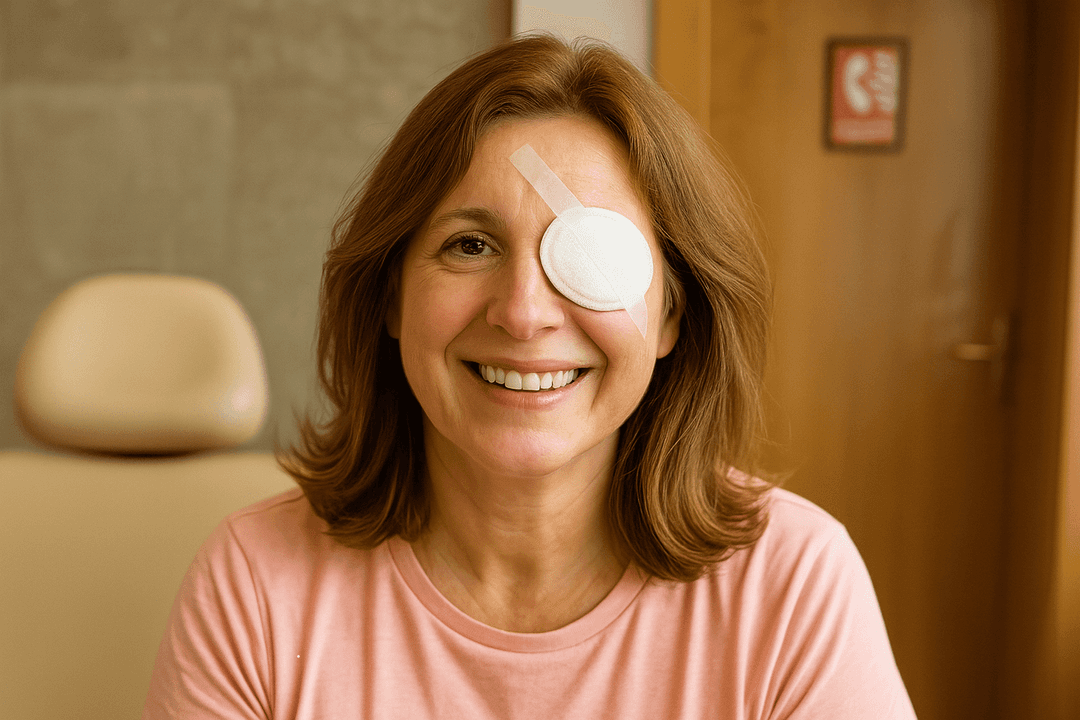
Recovery & Aftercare
Recovery times vary by procedure. LASIK and SMILE patients often notice dramatically improved vision within hours, with most returning to normal activities within 24-48 hours. PRK recovery is slower, with clear vision developing over 3-7 days. Cataract surgery patients typically experience improved vision the following day. You will have a follow-up appointment the next morning, with additional check-ups scheduled at one week, one month, and three months post-surgery. Spanish clinics provide detailed aftercare kits including preservative-free lubricating drops, protective eye shields for sleeping, and UV-protective sunglasses — particularly important given Spain's strong sunshine.

Healthcare System & Insurance Coverage
Spain's healthcare system is widely regarded as one of the best in the world, ranking seventh globally according to the World Health Organisation. The country operates a dual system comprising the public Servicio Nacional de Salud (SNS) and a thriving private sector. While refractive procedures like LASIK and SMILE are considered elective and are not covered by the public system, cataract surgery is available through the SNS for Spanish residents, though waiting times can be lengthy.
Private health insurance in Spain, offered by companies such as Sanitas, Adeslas, and MAPFRE, often includes partial or full coverage for cataract surgery and may offer discounted rates for refractive procedures at partner clinics. For international patients, it is important to check whether your home country's insurance policy covers overseas medical procedures. Some European health insurers, particularly in Germany and the Nordic countries, may reimburse a portion of the cost of eye surgery performed in Spain, especially when the procedure can be demonstrated to be medically necessary.
Many Spanish eye clinics offer flexible payment plans and financing options, typically interest-free for periods of 6-12 months. For international patients, clinics generally require payment in advance or at the time of treatment. VAT on medical procedures is zero-rated in Spain, and patients from non-EU countries may be eligible for additional tax benefits. It is advisable to obtain a detailed invoice from the clinic, as this documentation may be needed for insurance claims or tax deductions in your home country.
Quality Standards & Accreditation
Spain's eye surgery clinics operate under the strict regulatory oversight of the Spanish Ministry of Health and the respective regional health authorities. All surgical facilities must be licensed and regularly inspected, with requirements covering everything from equipment standards and sterilisation protocols to staff qualifications and emergency procedures. The Spanish Society of Ophthalmology (SEO) provides additional professional oversight and continuing education requirements for practising ophthalmologists.
Many of Spain's leading eye clinics hold international accreditations that go beyond national requirements. ISO 9001 certification is common, as is accreditation from Joint Commission International (JCI), the global gold standard in healthcare quality. Clinics like Clínica Baviera and IMO Barcelona have also participated in European-level research projects and clinical trials, contributing to the advancement of ophthalmic science and demonstrating their commitment to evidence-based practice.
Spanish ophthalmologists undergo extensive training, typically completing six years of medical school followed by a four-year ophthalmology residency (MIR programme), which is highly competitive and widely respected. Many surgeons pursue additional sub-specialty fellowships in refractive surgery, cornea, or retinal diseases, often at international institutions. The result is a workforce of highly skilled, research-active professionals who are well-versed in the latest surgical techniques and technologies.
Travel & Accommodation Guide
Getting There
Spain is exceptionally well-connected by air, with major international airports in Madrid (MAD), Barcelona (BCN), Malaga (AGP), Alicante (ALC), and Valencia (VLC). Budget carriers like Ryanair, EasyJet, and Vueling offer affordable direct flights from most European cities, with flight times typically ranging from 2-3 hours. High-speed AVE trains connect major cities efficiently, and Spain's modern motorway network makes driving a viable option for those coming from neighbouring France or Portugal. From the airport, clinics in major cities are easily accessible via metro, taxi, or private transfer services that many clinics can arrange.
Where to Stay
Accommodation options near major eye clinics are plentiful and varied. In Barcelona and Madrid, hotels in all price categories are available within walking distance of the main ophthalmology centres. Many patients choose to stay in serviced apartments, which offer kitchen facilities useful during the recovery period when eating simply and resting is recommended. Budget-conscious patients can find excellent three-star hotels for €50-€80 per night, while those seeking luxury recovery can choose from numerous four and five-star options. Some clinics have partnerships with nearby hotels offering discounted rates for surgical patients.
Combining Surgery with Travel
Spain's incredible cultural heritage, beaches, and gastronomy make it an ideal destination for combining medical treatment with a holiday. Patients typically need 2-3 days for the procedure and initial recovery, after which light tourism is perfectly feasible. Barcelona offers Gaudi's architectural masterpieces and Mediterranean beaches, Madrid boasts world-class museums like the Prado and Reina Sofia, and Andalusia provides historic cities like Seville and Granada. Be mindful of sun exposure during recovery — quality UV-protective sunglasses are essential, and avoiding dusty or sandy environments for the first week is recommended.


Key Cities for Eye Surgery
Barcelona
Spain's cosmopolitan Catalan capital is home to some of the country's most prestigious eye surgery centres, including IMO and Centro de Oftalmología Barraquer. The city's excellent healthcare infrastructure, international accessibility, and vibrant cultural scene make it the top choice for many medical tourists. Barcelona's El Prat airport offers direct flights to over 200 destinations worldwide.
Madrid
As Spain's capital, Madrid hosts major clinics from all the leading groups including Clínica Baviera, Miranza, and Oftalvist. The city's central location and extensive transport links make it convenient for patients from across Spain and Europe. Madrid also offers some of the most competitive pricing for eye surgery in the country due to the high concentration of competing clinics.
Valencia
The birthplace of Clínica Baviera, Valencia combines excellent eye surgery facilities with a more relaxed Mediterranean atmosphere. The city is known for its futuristic City of Arts and Sciences, beautiful beaches, and the famous local cuisine. Valencia offers a slightly lower cost of living than Barcelona or Madrid, which can translate to more affordable accommodation during your stay.
Malaga
The gateway to the Costa del Sol, Malaga has emerged as a popular destination for medical tourism including eye surgery. The city's international airport connects to cities across Europe, and the region's year-round sunshine provides an ideal recovery climate. Several major clinic groups have established centres here to serve both the local population and the large community of European expatriates.
Alicante
Home to a major Miranza/Vissum centre and Clínica Novovisión, Alicante is particularly popular with northern European patients seeking eye surgery in a sunny, affordable location. The city's well-connected airport and relaxed coastal lifestyle make it an appealing choice for those who want to combine their procedure with a beach recovery.
Frequently Asked Questions
QIs LASIK safe in Spain?
LASIK in Spain is extremely safe, with complication rates comparable to or lower than those reported in other developed countries. Spanish clinics use the same FDA-approved and CE-marked laser platforms found in the best centres worldwide, including the Zeiss VisuMax, Alcon WaveLight, and Schwind Amaris systems. Surgeons in Spain undergo rigorous training and must meet strict licensing requirements. The vast majority of patients achieve 20/20 vision or better, with serious complications occurring in less than 1% of cases.
QHow much does eye surgery cost in Spain?
Eye surgery costs in Spain are among the most competitive in Western Europe. LASIK and SMILE procedures typically range from €800 to €2,200 per eye, while cataract surgery costs between €1,500 and €3,500 per eye depending on the lens type chosen. ICL surgery ranges from €2,500 to €4,000 per eye. These prices often include the pre-operative assessment, the procedure, and post-operative follow-up visits. Some clinics offer all-inclusive packages for international patients that also cover accommodation assistance.
QDo I need a referral for eye surgery?
No, you do not need a referral to access private eye surgery in Spain. You can book a consultation directly with any private eye clinic. For international patients, it is helpful to bring recent eye test results or a referral letter from your home optometrist or ophthalmologist, as this can expedite the assessment process, but it is not required. The clinic will perform its own comprehensive examination regardless.
QHow long is the recovery time after LASIK?
Most LASIK patients in Spain experience significantly improved vision within a few hours of the procedure, with optimal results developing over 1-3 months. Patients can typically return to office work within 24-48 hours, though heavy physical activity and swimming should be avoided for at least two weeks. Driving is usually possible within 2-3 days, once your follow-up appointment confirms satisfactory healing. Your surgeon will provide a personalised recovery timeline based on your specific procedure and healing progress.
QCan international patients get eye surgery in Spain?
Absolutely. Spain actively welcomes international patients for eye surgery, and many of the country's leading clinics have dedicated international patient departments with staff who speak English, German, French, and other languages. The process is straightforward: you can contact the clinic directly, arrange a consultation (sometimes starting with a virtual assessment), and schedule your procedure. EU citizens can use their European Health Insurance Card (EHIC) for emergencies, but elective procedures are handled through private payment.
QWhat's the difference between LASIK and SMILE?
Both LASIK and SMILE are highly effective laser refractive procedures, but they differ in technique. LASIK involves creating a corneal flap and reshaping the tissue underneath with an excimer laser, while SMILE removes a small piece of corneal tissue (lenticule) through a tiny incision without creating a flap. SMILE offers a smaller incision, potentially less dry eye post-operatively, and greater corneal biomechanical stability. However, LASIK remains more versatile, able to treat hyperopia and a wider range of prescriptions. Your Spanish ophthalmologist will recommend the best option based on your individual eye characteristics.
QAre results permanent?
The refractive correction achieved through LASIK, SMILE, and PRK is permanent — the reshaped cornea does not revert to its original form. However, it is important to understand that your eyes can still change naturally over time. Patients in their 40s and beyond will develop presbyopia (age-related difficulty with near vision) regardless of prior laser surgery, and a small percentage of patients may experience some regression, particularly those with very high initial prescriptions. Cataract surgery and lens replacement results are also permanent, as the artificial lens does not degrade over time. Enhancement procedures are available if minor adjustments are needed.

Ready to Find Your Eye Clinic in Spain?
Browse 179 verified clinics, compare prices, and read real patient reviews.
Browse Clinics AboveExplore Clinics in Other Countries
Czech Republic
36 clinics
Austria
59 clinics
United Kingdom
150 clinics
Ireland
24 clinics
United States
839 clinics
Netherlands
65 clinics
Denmark
84 clinics
Germany
387 clinics
Sweden
68 clinics
Norway
50 clinics
Finland
32 clinics
Portugal
72 clinics
France
233 clinics
Slovakia
57 clinics
Belgium
98 clinics
Switzerland
196 clinics
Estonia
18 clinics
Hungary
51 clinics
Italy
190 clinics
Poland
147 clinics
Slovenia
29 clinics
Croatia
20 clinics
Romania
53 clinics
Bulgaria
19 clinics
Greece
72 clinics
Lithuania
11 clinics
Latvia
9 clinics
Turkey
88 clinics
Serbia
16 clinics
Iceland
2 clinics
Malta
17 clinics
Cyprus
22 clinics
Luxembourg
10 clinics